
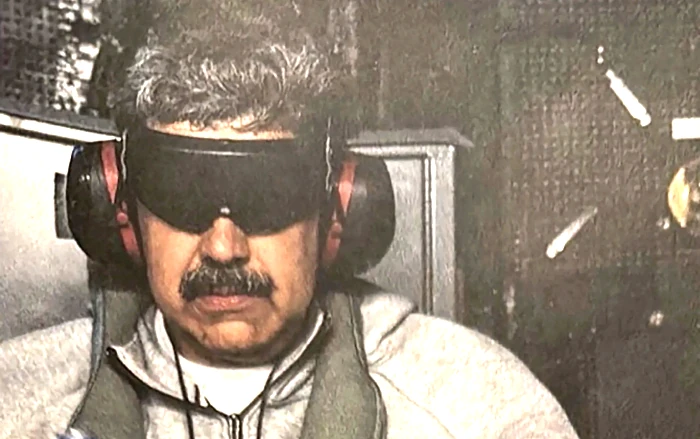



On January 3, 2026, in a move that immediately reverberated across global media and capitals, United States forces carried out a military operation in Venezuela that resulted in the capture of President Nicolás Maduro and his wife, Cilia Flores. U.S. officials confirmed that Maduro was flown to the United States to face longstanding criminal charges, including drug trafficking and related offenses.
The action, dubbed in some reporting as part of “Operation Absolute Resolve”, involved U.S. special operations forces and significant aerial support. Maduro’s capture and departure triggered Venezuela’s Supreme Tribunal to declare “forced absence” and install Vice President Delcy Rodríguez as acting president.
U.S. President Donald Trump and senior administration officials framed the raid as targeting alleged criminal activity and removing a leader accused of deepening Venezuela’s authoritarianism and economic collapse. Maduro and Flores have since appeared in U.S. federal court in New York and entered not-guilty pleas to the charges against them.
International reactions have been swift and mixed, including protest from international law experts and debates in bodies such as the U.N. over whether the operation violated Venezuelan sovereignty and international norms.
Beyond Regime Change, Strategic Motives in a Global Context
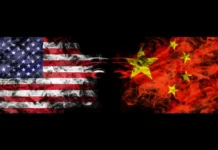
While the humanitarian and legal rationale for removing Maduro has been widely discussed, analysts and foreign policy observers argue that the operation cannot be fully understood without examining its broader geostrategic implications, particularly in the context of rising global competition between the United States and rival powers such as China and Russia.
A Return to Monroe Doctrine Logic
The United States has long regarded the Western Hemisphere as its strategic sphere of influence, a concept rooted in the 1823 Monroe Doctrine, which warned external powers against establishing dominance in the region. While global dynamics have evolved since the 19th century, that principle resurfaces in modern policy discussions whenever foreign powers expand influence close to U.S. borders. Venezuela, a long close partner of both Moscow and Beijing, served as a base of economic, military, and political cooperation that positioned those powers in United States’ backyard.
Countering Influence from Russia and China
For years, Russia has cultivated ties with Venezuela, supplying military equipment and security cooperation that bolstered the Maduro regime. Similarly, China has provided extensive loans, infrastructure investment, and economic support, including in Venezuela’s key oil sector. This combination of foreign alliances gave both nations a degree of leverage in Latin America that Washington views as inimical to U.S. interests.
Maduro’s capture can therefore be seen, in addition to legal and humanitarian frames, as a way to weaken these footholds and push foreign rivals further from U.S. strategic borders. Analysts cite this context when interpreting the timing and boldness of the action. While Maduro and his allies were weakened politically, their removal eliminated a longstanding conduit for international influence that ran counter to U.S. objectives.
Great Power Competition and the Indo-Pacific
The strategic rivalry between the U.S. and China extends far beyond the Caribbean and Andes. A central flashpoint in global politics today is Taiwan, an island democracy that China claims as part of its territory and has signaled it may take by force if necessary. In Washington, defense strategists argue that limiting Chinese influence in the Western Hemisphere, even through actions like Maduro’s capture, contributes to a broader effort to constrain Beijing’s global reach, including in the Indo-Pacific. While the connection is indirect, the logic is that reducing Chinese entrenchment in the Americas frees U.S. resources and political bandwidth to focus on challenges in East Asia.
Russia’s ongoing war in Ukraine and its close alignment with China further heighten this dynamic. By disrupting a key Latin American partner of both powers, the U.S. signaled to allies and rivals alike that it is prepared to act assertively to shape global power balances.
Regional Impacts and Risks
Domestic Venezuelan Politics
The removal of Maduro immediately altered Venezuela’s political terrain. Acting President Delcy Rodríguez has taken over executive duties, and there are reports of political detainees being released in gestures interpreted as efforts to stabilize public order.
However, the long-term political transition remains uncertain, with questions about legitimacy, national sovereignty, and internal divisions all unresolved.
International Law & Congressional Scrutiny
The operation has sparked debate over the legality of unilateral military actions without explicit international authorization. However, proponents of the operation argue that the U.S. doesn’t require authorization from the international community. Critics argue it sets a dangerous precedent, while supporters see it as justified given Maduro’s record and global threats associated with narcotrafficking networks. Additionally, U.S. lawmakers moved to advance a War Powers Resolution to limit further military actions in Venezuela without congressional approval, which some have labeled a significant political rebuke to executive military unilateralism.
Nicolás Maduro’s capture on January 3, 2026, represents an extraordinary moment in modern geopolitics. At face value, it marks the downfall of a long-standing authoritarian figure facing serious criminal charges. Beneath that, the action reflects a broader strategic effort by the United States to reassert influence in its hemisphere, counter the strategic reach of Russia and China, and position itself on firmer footing for future global competition.
It remains to be seen how these strategic goals will be balanced against legal, diplomatic, and regional stability concerns in the weeks and months ahead.
Visit our contact page to send us request on issues that matter most to you.